How to Prepare Your Home Electrical System for Winter Storms
When winter storms roll in, the last thing you want is to be left in the dark—or worse, dealing with a dangerous electrical issue. At Nix Electric, we know how quickly freezing weather and heavy winds can turn a minor problem into a major headache.
Your home or small business deserves to be safe, warm, and powered up all season long. That’s why we’re sharing practical steps to help you get ready, stay safe, and know when to call a trusted emergency electrician.
Why Winter Storms Threaten Electrical Systems ⚡
Winter storms are like uninvited guests that don’t just bring snow—they bring trouble. Ice and wind can snap power lines, while freezing rain seeps into outdoor outlets and panels. Heavy snow loads can stress your roof and attic wiring. Even a short power outage can disrupt heating, security, and daily life.
Common winter electrical issues include:
- Power Outages: Downed lines and overloaded grids.
- Short Circuits: Moisture sneaks into panels, outlets, or wiring.
- Surges: When power returns, sudden voltage spikes can fry electronics.
- Flickering Lights: Signals overloaded circuits or loose connections.
- Tripped Breakers: Heaters and appliances draw more current in the cold.
According to the National Fire Protection Association (NFPA), electrical failures or malfunctions are a leading cause of home fires, especially in winter. Prevention is key.
Key Maintenance Tips Before Winter
Think of your electrical system as a team. If one player is weak, the whole team suffers. Before the first snowflake falls, take these steps:
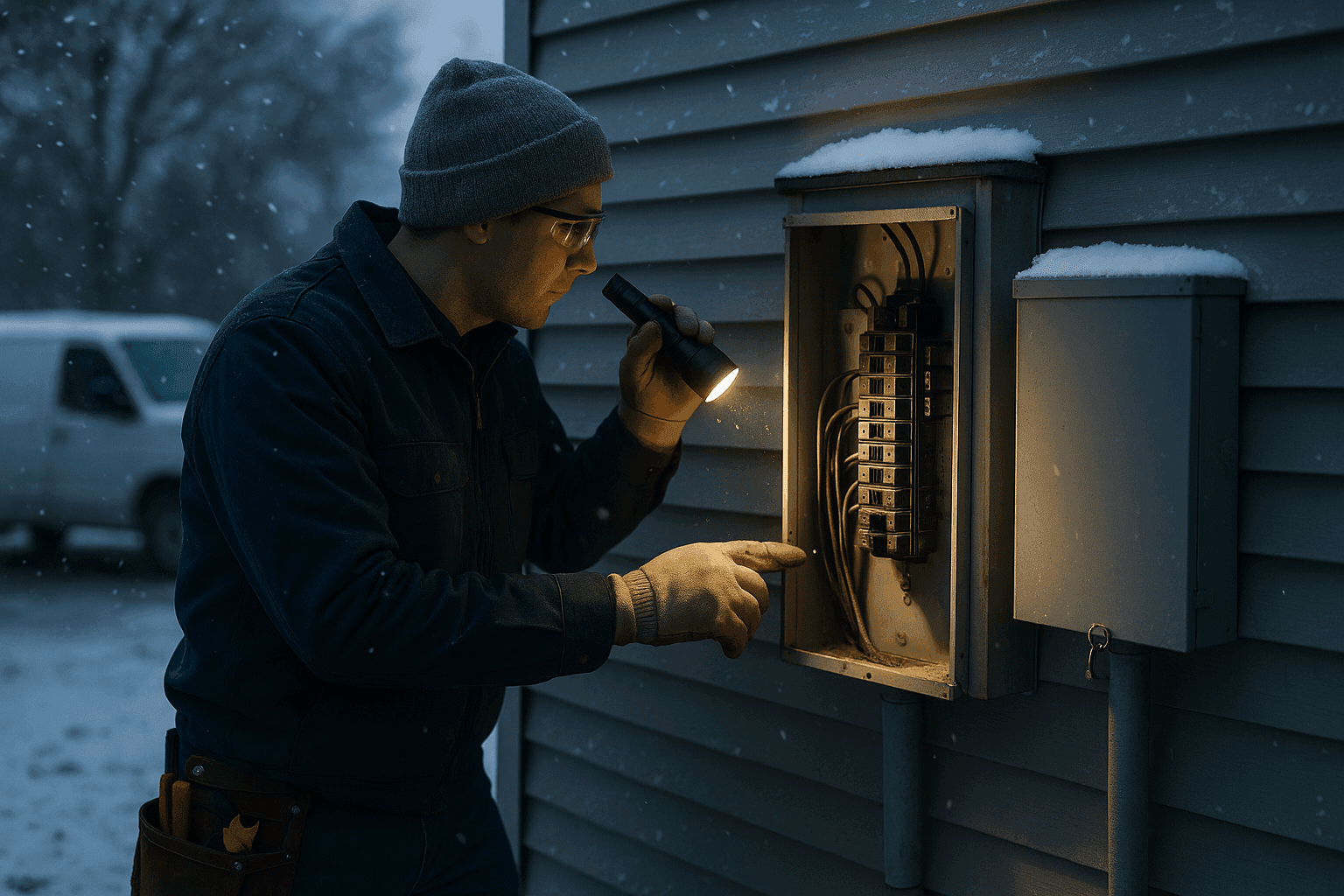
Inspect Your Electrical Panel
- Check for rust, corrosion, or odd smells.
- Make sure breakers are clearly labeled.
- Listen for buzzing or crackling sounds—never a good sign.
Test Outlets and Switches
- Plug in a lamp or tester. Flickering? Loose? Get it checked.
- GFCI outlets (those with reset/test buttons) should trip and reset easily.
Examine Outdoor Wiring
- Look for cracked insulation or exposed wires.
- Cover outdoor outlets with weatherproof covers.
Upgrade Surge Protection
- Install whole-house surge protectors or plug-in options for sensitive electronics.
- Unplug non-essential devices during storms.
Check Smoke and Carbon Monoxide Detectors
- Test alarms monthly and replace batteries as winter approaches.
- Remember, heating systems can increase CO risks.
Schedule a Professional Safety Check
- Certified electricians follow National Electrical Code (NEC) guidelines.
- A thorough inspection can spot hidden problems before they escalate.
How to Identify Vulnerabilities in Your Electrical Setup
Your electrical system can whisper warnings—if you know how to listen. Here’s what to watch for:
- Warm or Discolored Outlets: Heat means trouble.
- Frequent Breaker Trips: More than once a month? Something’s off.
- Buzzing or Crackling Sounds: Electricity should be silent.
- Burning Smells: Like toast, but not in a good way—shut off power and call for help.
- Old Wiring: Knob-and-tube or aluminum wiring needs special attention.
- Extension Cord Overload: Too many devices on one cord? Spread out the load.
If you spot these signs, don’t ignore them. Small issues often become big, costly problems in winter.
Emergency Preparedness and Backup Power Options
When the power goes out, you want to be ready—not scrambling for candles. Here’s how:
Install a Backup Generator
- Standby generators kick in automatically when the grid fails.
- Portable generators are handy but require safe setup—never run indoors.
Maintain Your Generator
- Test monthly and keep fuel fresh.
- Store outdoors, away from windows and vents.
Know Your Critical Circuits
- Identify which appliances and outlets must stay powered (fridge, heat, medical devices).
- Label your panel for quick action during an emergency.
Keep Emergency Supplies Ready
- Flashlights, batteries, and battery-powered chargers.
- Manual can opener and bottled water.
- Blankets and warm clothing.
24/7 Emergency Electrician Services
- Save Nix Electric’s number in your phone.
- We’re available day or night to handle urgent repairs, restore power, and keep you safe.
When to Call a Professional
Some jobs are DIY-friendly. Others aren’t. Here’s when it’s time to bring in the experts:
- You Smell Burning: Shut off the main breaker and call immediately.
- Water Meets Wires: Never touch wet electrical equipment.
- Repeated Power Loss: If outages keep happening, you need a pro.
- Panel Upgrades or Rewiring: These jobs require licensed electricians and code compliance.
- Generator Installations: Proper setup is essential for safety.
Nix Electric’s certified team performs safety inspections, repairs, and installations with your peace of mind at heart. We’re available 24/7—even when the weather is at its worst.
Practical Prevention Tips for Winter Electrical Safety
Stay ahead of problems with these simple habits:
- Clear Snow and Ice: Keep outdoor meters, vents, and panels accessible.
- Trim Trees: Branches near power lines are a recipe for outages.
- Don’t Overload Circuits: Space heaters, holiday lights, and kitchen appliances all draw power—spread them out.
- Test GFCIs and AFCIs: Ground Fault and Arc Fault Circuit Interrupters protect against shocks and fires.
- Schedule Annual Inspections: A yearly checkup keeps your system strong.
For more tips, check resources from the Electrical Safety Foundation International (ESFI) and the National Fire Protection Association.
Frequently Asked Questions
How often should I have my electrical system inspected?
Most homes and small businesses benefit from an annual inspection, especially before winter. Older properties or those with frequent issues may need more frequent checks.
Can I install a generator myself?
Portable units can be set up by homeowners, but standby generators should always be installed by a licensed electrician. Incorrect installation is dangerous and may void warranties.
What should I do if my breaker keeps tripping?
Unplug appliances from the affected circuit and reset the breaker. If it trips again, call an electrician—this could signal a serious wiring fault.
Are surge protectors necessary if I have a backup generator?
Yes. Generators can also cause surges when starting up. Layered protection is best for sensitive electronics.
Special Considerations for Winter Electrical Readiness
Winter storms don’t just test your patience—they test your electrical system’s limits. If you have a pool, spa, EV charger, or home automation setup, make sure these systems are winterized and protected. Don’t forget about low voltage systems like doorbells, intercoms, and data cabling. Even small oversights can lead to big headaches when the mercury drops.
Remember, electrical safety isn’t just about comfort—it’s about protecting your property and everyone inside. Whether you’re a homeowner or a small business owner, taking the time to prepare makes all the difference.
Call Nix Electric now — or reach us anytime at 844-484-2083 .