Whole-Home Surge Protection: Shielding Your Devices from Damage
When thunder rumbles and the lights flicker, a wave of worry can sweep through any homeowner. Will your electronics survive the next big surge? Storms, outages, and even everyday spikes can threaten your valuable appliances and devices.
At Nix Electric, we’ve seen firsthand what a single surge can do. TVs fried. Office equipment knocked out. Home automation systems rendered useless in a flash. The good news? With the right surge protection strategies, you can safeguard your home—and your peace of mind.
What Is a Power Surge? ⚡
Picture a power surge like a sudden tidal wave racing through your home’s wiring. It’s a spike in voltage—often lasting less than a thousandth of a second. Most homes in the U.S. run on 120 volts. If that jumps to 1,000 or more, fragile electronics can burn out faster than you can say “reset.”
What causes surges?
- Lightning strikes (even miles away)
- Power grid switching by utility companies
- Downed power lines after storms
- Large appliances turning on/off (think AC units or refrigerators)
- Faulty wiring inside your walls
The results? Anything plugged in can suffer. Sometimes the damage is instant; other times, repeated small surges wear down your devices until they quietly fail.
The Hidden Dangers: Devices Most at Risk
Some items in your home are tougher than others. But many are surprisingly fragile.
Vulnerable devices include:
- TVs, computers, and gaming consoles
- Smart home hubs, Wi-Fi routers, and security systems
- Kitchen appliances (microwaves, fridges, dishwashers)
- HVAC controls and thermostats
- Pool and spa electronics
- EV chargers and backup generators
Imagine if your fridge suddenly died, or your home office equipment was lost in a flash. The cost isn’t just money—it’s lost time, hassle, and sometimes important data.
Plug-In Surge Protectors vs. Whole-Home Solutions
Most folks are familiar with those strip-style surge protectors you buy at the hardware store. They’re handy for a few gadgets. But think of them as umbrellas in a hurricane. They cover what’s plugged in—but leave the rest of your home exposed.
Plug-in surge protectors:
- Protect only what’s plugged directly into them
- Wear out over time (and often give no warning)
- Can’t shield hardwired items like lighting, HVAC, or built-in appliances
Whole-home surge protection:
- Installed at your main electrical panel
- Defends every circuit, outlet, and device in your home
- Handles much larger surges, including lightning strikes nearby
- Meets National Electrical Code (NEC) recommendations for new homes
In short: A whole-home system is like a sturdy fortress gate. It keeps the big threats out—before they ever reach your valuables.
Quick Safety Checklist: Are You at Risk?
Not sure if you need surge protection? Run through these quick checks:
- Do you live in an area prone to storms or outages?
- Have you noticed flickering lights or tripped breakers?
- Is your home filled with sensitive electronics or smart devices?
- Do you have a home office or rely on remote work?
- Do you have older wiring or frequent appliance cycling?
If you answered yes to even one, your risk is higher than you think.
DIY Solutions vs. Calling a Professional
It’s tempting to grab a few surge strips and call it a day. But the reality is, plug-in protectors are only a Band-Aid.
DIY options:
- Useful for a handful of low-cost devices
- Often fail to protect against major surges
- Don’t stop surges entering through cable, phone, or data lines
Professional installation:
- Ensures whole-home protection at the main panel
- Addresses all incoming lines (power, phone, internet, data)
- Meets local building codes and safety standards (see NFPA 70/NEC)
- May be required by insurance or to maintain warranties
Bottom line: For true peace of mind, call in the pros. Emergency electrician services—like Nix Electric—are available 24/7 for urgent help.
What Happens When the Pros Arrive
Here’s what you can expect from a professional surge protection service:
- Assessment: Inspection of your home’s wiring, panel, and risk factors.
- Solution design: Selection of the right surge protection system for your needs.
- Installation: Mounting the device(s) at your main panel, and connecting to ground as required by code.
- Testing: Verification that the system is working and that every circuit is protected.
- Education: Tips on maintenance, warning signs, and what to do during an emergency.
A seasoned pro will also spot hidden issues—like aging wiring or overloaded circuits—that could put your home at risk.
Choosing the Right Surge Protection System
Not all surge protectors are equal. Here’s what matters:
- UL 1449 listing: Look for devices tested to rigorous safety standards.
- Clamping voltage: Lower is better (the voltage where the device kicks in).
- Response time: The faster, the safer.
- Joule rating: Higher = more energy absorbed before failure.
- Coverage: Make sure all incoming lines are protected—power, phone, cable, data.
- Warranty and insurance: Some insurers require whole-home protection for coverage. Check your policy!
Consulting with an emergency electrician ensures you get a system that actually fits your home—not just a one-size-fits-all box.
Installation Basics: What’s Involved?
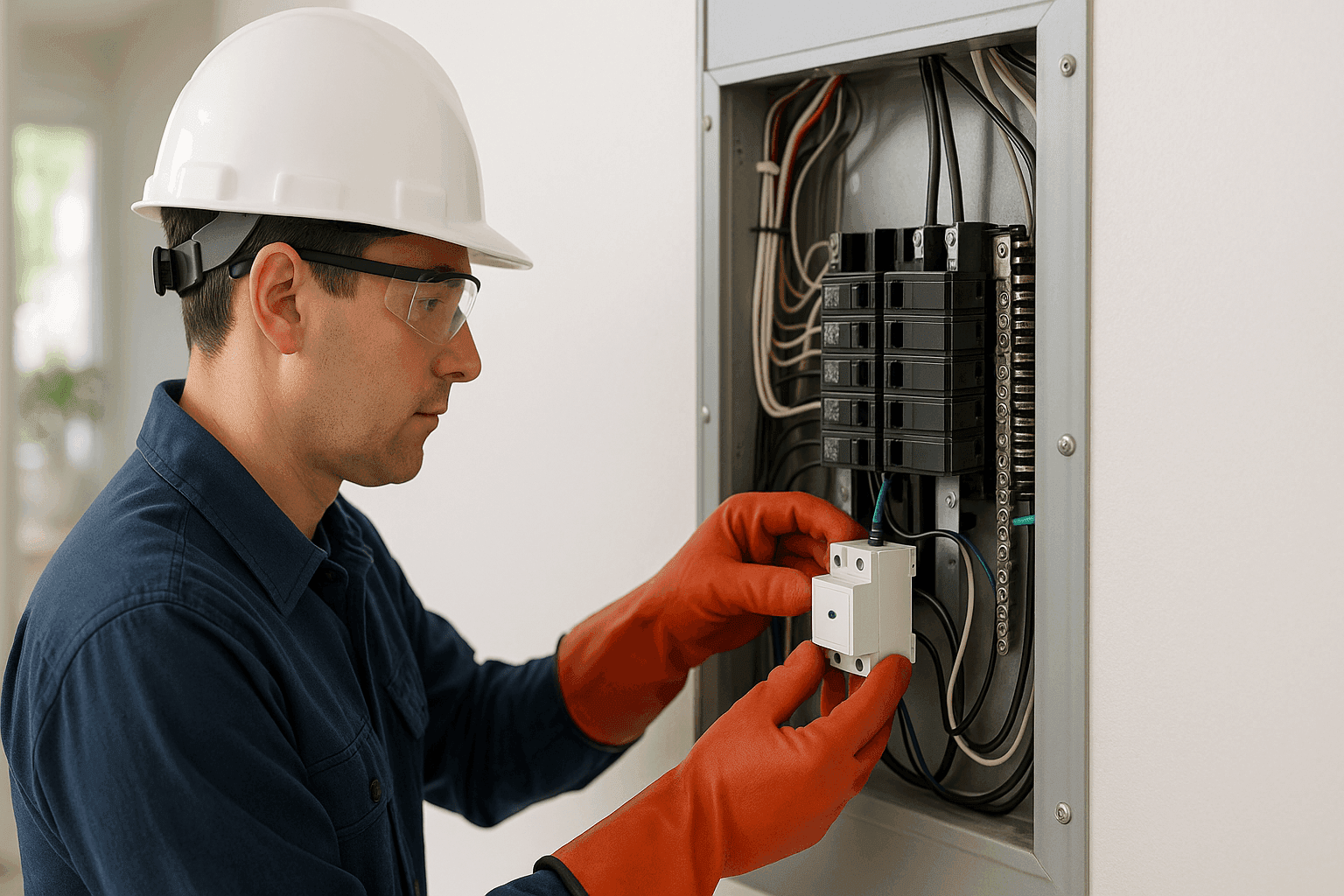
Whole-home surge protectors are typically installed right at your main panel—where power enters your home. This isn’t a DIY project; connecting to the wrong breaker or skipping grounding can be dangerous.
Installation steps include:
- Shutting off main power for safety
- Mounting the surge protector in the panel or adjacent to it
- Wiring to the correct breakers and ground
- Testing every circuit for coverage
Expect installation to take between one and three hours, depending on your panel and home layout.
Prevention & Maintenance Tips
A surge protector isn’t a “set it and forget it” device. Like a smoke detector, it needs attention from time to time.
Practical tips:
- Check indicator lights monthly—replace if they show failure
- Have your system inspected during annual electrical safety inspections
- Update your surge protector every 5–10 years, or after a major lightning event
- Unplug sensitive electronics during severe storms for added protection
- Never daisy-chain surge strips (it doesn’t double your safety)
NEC and NFPA guidelines recommend regular maintenance of all electrical safety devices.
Costs & Time Factors
What should you expect to invest? While prices vary by home size and panel type, here’s a ballpark:
- Plug-in strips: $20–$60 each; limited coverage
- Whole-home surge protector device: $150–$500 for equipment
- Professional installation: Additional labor, but ensures safety and code compliance
Most jobs are completed same-day. Think of it as a small investment to protect thousands of dollars in home electronics and peace of mind—especially during storm season.
When It’s an Electrical Emergency
Sometimes, surges aren’t just a nuisance—they’re emergencies.
Call an emergency electrician if:
- You smell burning or see scorched outlets
- Breakers trip repeatedly after a storm
- Lights flicker or dim unpredictably
- Key appliances won’t power up after a surge
- You notice melted or damaged cords
Don’t take risks with electrical safety. It’s better to call for Commercial Services near you immediately than wait and see.
Surge Protection FAQ
Do surge protectors wear out over time?
Yes. Even whole-home devices lose effectiveness after several large surges. Check indicator lights and schedule regular inspections.
Will a whole-home surge protector stop every lightning strike?
No device can guarantee 100% protection from a direct lightning hit. But a professionally installed system greatly reduces risk from most surges.
Will surge protection lower my insurance premiums?
Some insurers offer discounts—or require surge protection to maintain coverage. Always check your policy and ask your provider.
Can I install a whole-home surge protector myself?
It’s not recommended. Correct installation requires shutting off the main panel, connecting to live circuits, and ensuring proper grounding per local code.
Local and Seasonal Considerations
Storms don’t watch the calendar. But surge threats spike during stormy seasons, especially in areas with frequent lightning or unstable grids.
- If you’re in a region with severe weather: Install before the next big storm.
- Older homes: More likely to have outdated wiring—higher risk.
- Homes with pools, spas, or EV chargers: More electronics to protect.
Nix Electric offers 24/7 emergency electrician services, repairs, and Commercial Services near you—so you’re never left in the dark.
Ready to shield your home from costly surges? Call Nix Electric now — or reach us anytime at 844-484-2083 .